

Two big media companies, two troubling developments
CBS News's parent caves to Trump and The New York Times publishes a made-up scandal.


Two of the biggest and most influential media outlets in the United States failed, over the past week or so, to fulfill their public mission.
One is a much bigger deal than the other, but both are extremely telling in their own ways.
The bigger deal is that CBS News — or actually its parent company, Paramount Global — sold out its journalists and its viewers when it chose to settle a lawsuit filed by President Trump, to the tune of $16 million.
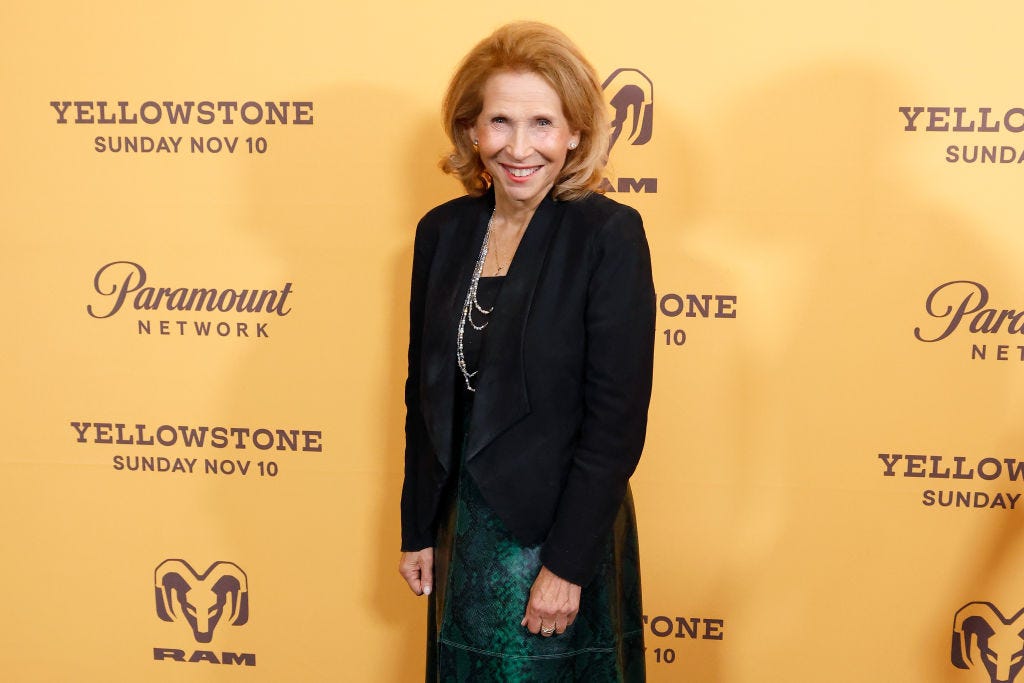
The money goes to Trump’s future “library.” (Why do I get the visual image of rows of “The Art of the Deal” on every gilt-trimmed shelf?) This development is really worrying because it represents yet another big media company capitulating to Trump’s bullying; it sets a terrible precedent and undoubtedly will encourage him to sue other news organizations. It will cause self-censorship and even more media kowtowing.
The suit was eminently winnable, and settling it is tantamount to an admission of wrongdoing — of which there was none. As you might recall, Trump’s complaint was that an interview on “60 Minutes” presented a biased and partisan view of his then-rival for the presidency, Kamala Harris. Specifically, the complaint was that the editing of her remarks was designed to present her in a favorable light. By all accounts, however, the editing was thoroughly normal.
Here’s what Jameel Jaffer, who heads the Knight First Amendment Institute at Columbia University, had to say. I agree with every word:
“Today is a sad day for press freedom. This was a frivolous lawsuit and the payment being described as a ‘settlement’ bears no relation to Paramount’s actual legal exposure in the case, which was negligible. Paramount should have fought this extortionate lawsuit in court, and it would have prevailed. Now Trump’s presidential library will be a permanent monument to Paramount’s surrender, a continual reminder of its failure to defend freedoms that are essential to our democracy.”
Then, there’s the New York Times, which seems to be on a campaign against Zohran Mamdani, who recently won the Democratic primary for mayor in New York City. A few days ago, the Times published a non-story about how Mamdani — as a teenager — filled out a form as he applied to Columbia University. The headline: “Mamdani Identified as Asian and African American on College Application.” (He is of Indian descent, was born in Uganda, and lived for a brief time in South Africa until moving to the U.S. as a child.)
I wrote a column about it for Monday’s Guardian US, and you can read it here.
My takeaway is that the story didn’t meet basic standards of newsworthiness, and that it shouldn’t have been published. Maybe it would have made a reasonable couple of paragraphs in a larger story about his educational background, but not a full article, prominently displayed on the web site, with a later print headline that read: “Mamdani Faces Scrutiny Over College Applications.” (Gee, I wonder how it came to be that he faces this scrutiny you speak of, NYT?)
Soledad O’Brien, the prominent media entrepreneur and journalist, was one of the many critics of the piece, calling it “an absolute embarrassment” for the Times.
Some of the details — like the story’s unsavory sourcing — make its publication an even worse decision. (I take that up in the Guardian column, linked above.) When you combine it with the very weird Times editorial I wrote about here recently, the paper is making its distaste for Mandami, a 33-year-old Muslim and social democrat, all too clear. As I note, the paper’s opinion side is, by definition, entitled to its opinions, however misguided; but a news article that tries to create malfeasance out of thin air? No.
I feel obligated here to say what I often say about the Times — and this goes for the journalists at CBS News, too, and those at the troubled Washington Post: A lot of important and excellent work gets done at these places. The Times is, in my view, essential. So, too, the Post. Yes, still. I shuddered when one of the Post’s best reporters, the great Ellen Nakashima, was criticized recently by Tulsi Gabbard, the Director of National Intelligence, for “actively harassing” federal employees as she pursued a story. In other words, she was reporting. What’s to stop Gabbard’s boss from suing the Post over this nonsense on some sort of trumped-up national security grounds? And can we expect Post owner Jeff Bezos to do anything other than pay up and tell Post journalists to shut up?
In this context, these recent misjudgments at Paramount and the Times — let’s go ahead and call them screwups — really matter, especially as our nation moves ever-closer to autocracy.
We need the American press to be at its best right now. But it’s not. Not even close.
Readers, thank you so much for being here and for caring about the crucial relationship between democracy and media. I welcome your views on either or both of these situations. I know that many of you have canceled your subscriptions to the Times and the Post; I probably never will. What are your latest thoughts?
My background: I am a Lackawanna, NY native who started my career as a summer intern at the Buffalo News, my hometown daily. After years as a reporter and editor, I was named the paper’s first woman editor in chief in 1999, and ran the 200-person newsroom for almost 13 years. Starting in 2012, I served as the first woman “public editor” of the New York Times — an internal media critic and reader representative — and later was the media columnist for the Washington Post. These days, I write here on Substack, as well as for the Guardian US, and teach an ethics course at Columbia Journalism School. I’ve also written two books and won a few awards, including three for defending First Amendment principles.
The purpose of ‘American Crisis’: My aim is to use this newsletter (it started as a podcast in 2023) to push for the kind of journalism we need for our democracy to function — journalism that is accurate, fair, mission-driven and public-spirited. That means that I point out the media’s flaws and failures when necessary.
What I ask of you: Last fall, I removed the paywall so that everyone could read and comment. I thought it was important in this dire moment and might be helpful. If you are able to subscribe at $50 a year or $8 a month, or upgrade your unpaid subscription, that will help to support this venture — and keep it going for all. Thank you!
"Every record has been destroyed or falsified, every book rewritten, every picture has been repainted, every statue and street building has been renamed, every date has been altered. And the process is continuing day by day and minute by minute.
History has stopped.
Nothing exists except an endless present in which the Party is always right." - George Orwell
Gets more real every day.
I did cancel my subscriptions to the Times and the Post in 2024 (after years of daily reading) due to their horrific "coverage" of the campaign, normalizing the toxic clown's "speeches" etc. I still subscribe to the Boston Globe. Can't let it go altho it suffers from many of the same issues. But I don't read it like I used to, and get most of my news from Indy Substack writers like you and podcasts-- the Bulwork, Pod Save, etc. thanks for being here.